
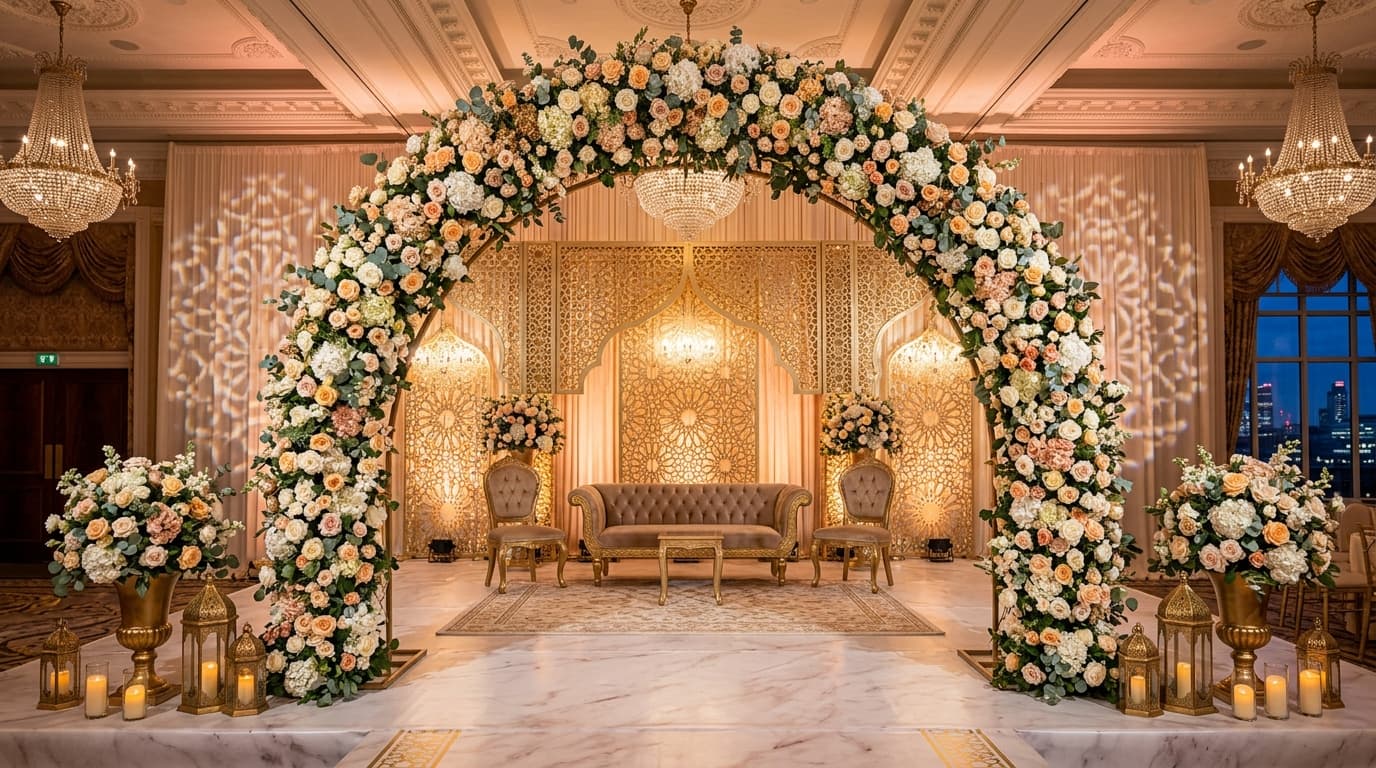
The Essential Pillars of a Valid Sunni Nikah
In Islam, marriage is described in the Qur’an as a Mithaqan Ghalidha—a solemn, sacred covenant (Surah An-Nisa 4:21). Because this bond forms the foundation of the Muslim family, Sunni Islamic jurisprudence (Fiqh) establishes clear, immutable conditions to ensure the marriage is entered into with complete free will, familial honour, and legal validity.
The essential pillars recognized across the four orthodox Sunni Madhabs (Hanafi, Shafi’i, Maliki, and Hanbali) are:
- Free and Informed Consent between the prospective bride and groom.
- The Offer and Acceptance (Ijab and Qabul) spoken clearly in the present tense.
- The Presence and Representation of the Wali (the bride’s lawful guardian).
- Two Upright Muslim Male Witnesses who observe and attest to the contract simultaneously.
- The Specification of the Mahr (mandatory dowry granted directly to the bride).
Among these conditions, couples and families in the UK often have the most questions regarding the precise role of the Wali and the legal qualifications of the witnesses. This guide provides clear, practical, and scholarly answers.
1. The Role of the Wali (Guardian)
The word Wali in Arabic signifies an ally, protector, and guardian. In the context of marriage, the Wali is the male relative responsible for safeguarding the bride’s best interests, ensuring she enters the marriage with dignity, and verifying that the groom is a suitable, upright match who can fulfill his Islamic marital obligations.
The Prophet Muhammad (peace be upon him) stated in an authentic Hadith recorded by Abu Dawud, At-Tirmidhi, and Ibn Majah:
“There is no marriage without a Wali.”
Who Qualifies as the Wali?
Islamic law establishes a defined order of guardianship based on paternal lineage (Asabah):
- The Father: The primary and natural Wali of the woman.
- The Paternal Grandfather: If the father has passed away.
- The Adult Son: (If the bride has an adult son from a previous marriage).
- Full Brothers: (Sharing both mother and father).
- Paternal Half-Brothers: (Sharing the same father).
- Paternal Uncles: (Brothers of the father).
- Paternal Nephews and Cousins: In descending order of paternal kinship.
Note: Maternal relatives (such as the mother’s father or maternal uncles) do not hold primary guardianship in Sunni Fiqh unless appointed or where paternal kin are absent or untraceable.
Scholarly Nuances Across the 4 Madhabs
The Majority View (Shafi’i, Maliki, Hanbali): The physical presence, consent, and contract execution by the Wali is a strict condition of validity (Shart Sihhah) for any woman, whether a virgin or previously married.
The Hanafi View: An adult, sane woman who has reached puberty possesses legal agency over herself and may contract her own marriage, provided the groom is of equal social standing (Kafa’ah) and the Mahr is not set below the market rate (Mahr al-Mithl). Nonetheless, the Hanafi school strongly recommends the involvement and blessing of the father to maintain family unity and follow the Sunnah.
Our conducting Imams accommodate all established Sunni schools while upholding the bride’s fundamental Islamic right to give free, unforced consent.
What Happens If the Wali Is Unavailable or Withholding Consent?
Islamic jurisprudence provides compassionate, robust solutions for situations where guardianship cannot be exercised:
- Proxy Delegation (Wakalah): If the father lives abroad (e.g. in Pakistan, Bangladesh, the Middle East, or Somalia), he can formally appoint a trusted representative (Wakil) in the UK via written authorisation or phone consultation with the Imam.
- Convert Sisters (Reverts): Non-Muslim relatives cannot act as a Wali in an Islamic marriage contract. In such cases, an authorised Sunni Islamic scholar or community Imam serves as her Wali (Wali al-Hakim).
- Unreasonable Withholding (Adhl): If a Wali unreasonably prevents a woman from marrying a suitable, upright Muslim man for non-Islamic reasons (such as caste, ethnicity, or personal disputes), the Shariah allows guardianship to pass to the next nearest paternal relative or an Islamic judge/Imam.
2. The Role and Qualifications of the Two Witnesses
A secret marriage is strictly prohibited in Sunni Islam. To ensure publicity, public accountability, and legal certainty, the Prophet Muhammad (peace be upon him) commanded:
“There is no marriage without a guardian and two upright witnesses.”— Recorded by Al-Bayhaqi & Ad-Daraqutni
To be religiously valid, the two witnesses must fulfill strict conditions:
- Muslim: Both witnesses must be practicing Muslims.
- Adult & Sane: Both must have reached the age of maturity (Baligh) and possess sound mind.
- Two Males (or One Male and Two Females in Hanafi Fiqh): The majority standard requires two adult male witnesses present in person.
- Simultaneous Hearing: Both witnesses must hear the exact offer (Ijab) and acceptance (Qabul) simultaneously in the same room.
- Upright Character (Adl): Known for basic moral reliability and truthfulness.
How Our Imam Conducts Verification on the Day
When our Imam attends your ceremony—whether a Nikah at home or at a wedding venue—he inspects valid photo IDs for the groom, the bride, the Wali, and both witnesses. He speaks privately with the bride to confirm her unequivocal, voluntary consent before executing the contract and issuing your official Islamic Nikah certificate.